

This report publishes the findings of a survey Extole ran in August 2014. The figures are shown as originally published.
Retail marketers use a variety of digital programs to meet their objectives, but that mix shifts regularly. The marketer's goals determine which programs she will use, based on how effective they are at hitting those goals. What digital tactics are retail marketers using today? What are they trying to accomplish with them? Which tactics do they think work and which don't? Where are they spending their money? We surveyed over 300 people responsible for marketing and technology within retail organizations to find out.
Executive summary
Our survey revealed:
- More than 60% of retailers will increase digital marketing budgets next year.
- Retail marketers' top digital priority is customer acquisition, followed by retention, conversion, and awareness.
- Social media and email are among the most effective tactics for all objectives. Most marketers will spend as much as or more on them this year than they did last year.
- Paid search, affiliate marketing, and content marketing are among the least effective tactics for retail goals. Marketers will spend less on these this year than they did last year.
Referral marketing gets results for retailers
Our survey also uncovered details of how retail marketers use referral marketing, or refer-a-friend programs that acquire new customers at scale by rewarding existing customers. We found that:
- Retail marketers find referral marketing effective for priorities across the marketing funnel, particularly conversion.
- Referral marketing acquires a relatively high percentage of retailers' new customers.
- Referral marketing generates strong ROI for retailers.
Introduction
Retail marketing means digital marketing. Retailers now spend 58 percent more of their total marketing budget on digital than the average company does. Moreover, 20 percent of retail marketers report that digital now accounts for 50 to 75 percent of their total spend, and 19 percent say that it constitutes 75 to 100 percent of their marketing budget.
Of course, "digital" isn't just one thing. The term encompasses a variety of tactics, programs, and technologies. Coupons, for example, are a traditional retail tactic but have become digital by being adapted for modern distribution platforms. In fact, a recent Forrester Consulting study indicated that a majority of consumers feel that digital coupons reflect positively on a retailer's brand, that they generate loyalty, and that they influence purchase. Social media, on the other hand, is a phenomenon that can't be understood outside of the digital world. Both of these can be considered forms of digital marketing.
A June 2014 survey by Gigaom Research (underwritten by Extole) of digital marketers across all industries suggests that they draw on a broad palette of digital tactics to achieve their objectives. That survey found that the four most popular are email marketing, social media marketing, search engine optimization (SEO), and content marketing.
Our survey finds that retail marketers use many of these same tactics, but not necessarily to achieve the same goals. There are also some critical differences in how retail marketers spend money on digital marketing compared with the broader landscape of marketers.
To understand how retailers deploy the digital marketing mix, we surveyed 302 people involved directly in marketing and technology within retail companies of various sizes, geographical footprints, and budgets. We asked them about the programs they use and how those programs perform toward specific goals. We asked them about their budgets and spending plans. Because Gigaom Research called referral marketing "the digital-marketing dark horse," and said that brands that invest in referral can gain a competitive advantage over those investing elsewhere, we also asked specifically about referral marketing to find out whether and how retail marketers are using referrals, and what results it drives.
Digital budgets and spending
Social media and email marketing are now the leading tactics; both are used by 85 percent of respondents. Display advertising and SEO also rank high, while mobile and digital video are seeing wide adoption.
Digital programs used regularly (share of respondents)
- Social media marketing: 85%
- Email marketing: 85%
- Display advertising: 75%
- Search engine optimization: 72%
- Mobile advertising: 68%
- Digital video advertising: 59%
- Content marketing: 56%
- Paid search: 56%
- Referral marketing: 55%
- Affiliate marketing: 43%
Budget size
Half the retailers surveyed spend between $100,000 and $1 million per year on digital marketing. A little under a quarter spend under $100,000 per year, while slightly more spend at least $1 million per year. By range: under $10k, 4%; $10,001 to $50k, 5%; $50,001 to $100k, 14%; $100,001 to $250k, 20%; $250,001 to $500k, 17%; $500,001 to $1mm, 14%; $1mm to $5mm, 20%; over $5mm, 6%.
Budgets are rising
Overwhelmingly, retailers expect to increase their digital marketing spending levels next year. Nearly two thirds of them plan to spend more, and 76 percent of those marketers plan to spend 6 to 20 percent more. About a third of marketers expect spending to remain steady. Meanwhile, fewer than 5 percent expect to spend less next year.
| Expected change next year | Share of respondents |
|---|---|
| Down 1-5% | 1% |
| Down 6-10% | 1% |
| Down 11-20% | 2% |
| Down more than 20% | 0% |
| No change | 33% |
| Up 1-5% | 11% |
| Up 6-10% | 28% |
| Up 11-20% | 20% |
| Up more than 20% | 4% |
Where the money is going
How do they currently spend their budgets? Social media, in particular, is booming. Forty-one percent of retailers say they'll spend more on it this year than last. Supporting social's rise, Gigaom also found that most marketers would be spending more on social media marketing. Forrester Research found that 62 percent of retailers plan to spend more on Facebook interactive marketing efforts this year. Mobile advertising, email marketing, digital video advertising, and display advertising round out the top five tactics seeing increased spending this year.
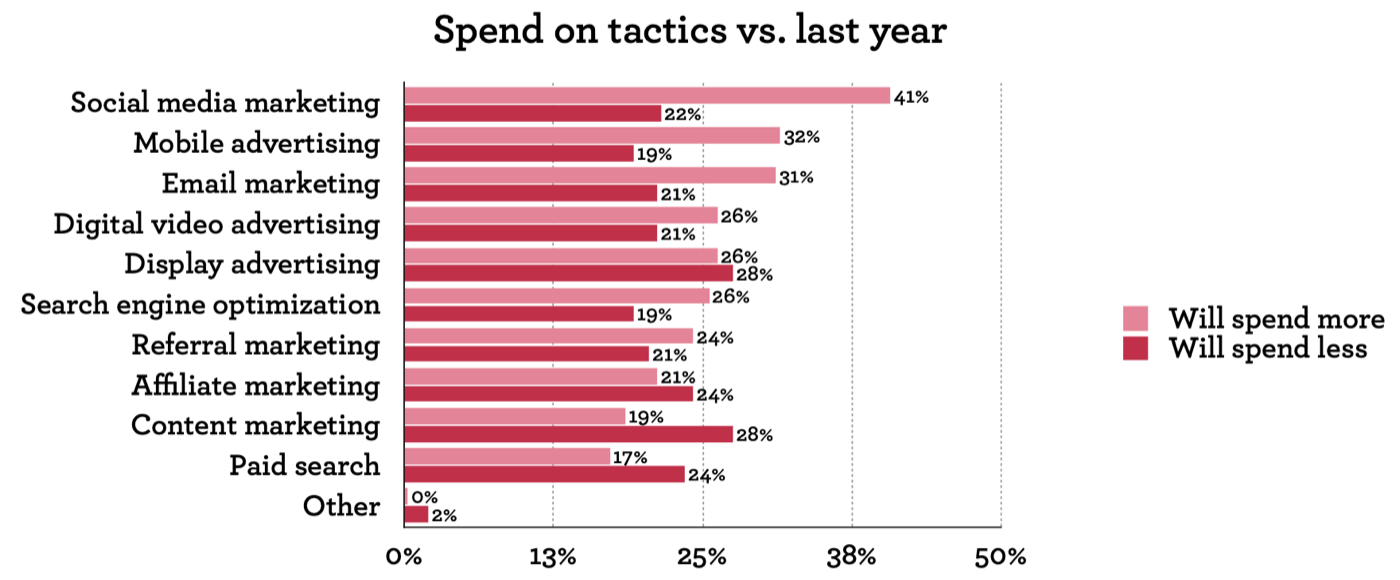
Looking deeper into expected spending changes, social media, mobile advertising, and email are the three tactics on which a majority of retail marketers are spending more, regardless of whether they see their overall digital budgets rising, falling, or remaining constant.
The digital programs that get results
Retail marketers' primary goal is customer acquisition, followed closely by retention and conversion. Coming in noticeably behind, in fourth place, is branding and awareness. Share of respondents ranking each objective as "fairly" or "extremely" important: acquisition 86%, retention 85%, conversion 84%, awareness 77%.
The various digital tactics perform differently depending on marketers' objectives. Social media and email marketing are at or near the top of the list across all four funnel goals.
Referral marketing and display advertising also appear consistently near the top of retail marketers' list of effective tactics for awareness, acquisition, conversion, and retention. Both are top-five tactics across all four goals. Referral marketing is a top-three tactic for marketers' two most important goals, acquisition and retention.
At the other end of the spectrum are paid search, affiliate marketing, and content marketing. These three appear at the bottom of the list for every objective, save for acquisition, for which paid search makes it out of the bottom three but remains in the lower half of the list.
Social media, email, referral marketing, and display advertising are the only tactics to appear in the top five for all four funnel goals.
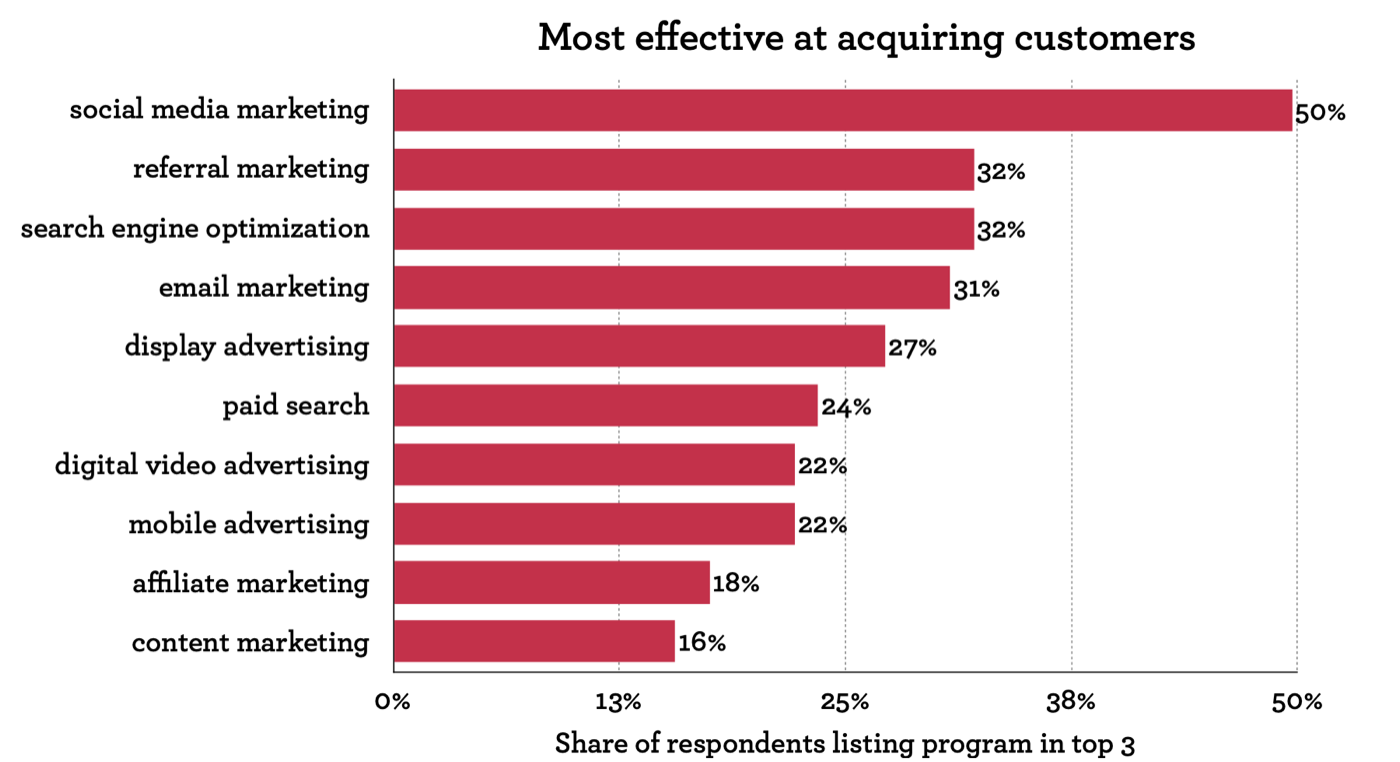
Most effective at acquiring customers
Share of respondents listing the program in their top three:
Most effective at retaining customers
- Email marketing: 51%
- Social media marketing: 46%
- Referral marketing: 29%
- Mobile advertising: 27%
- Display advertising: 23%
- Digital video advertising: 22%
- Search engine optimization: 20%
- Affiliate marketing: 18%
- Content marketing: 18%
- Paid search: 11%
Most effective at converting customers
- Email marketing: 44%
- Social media marketing: 37%
- Display advertising: 28%
- Referral marketing: 28%
- Digital video advertising: 26%
- Mobile advertising: 24%
- Search engine optimization: 23%
- Affiliate marketing: 22%
- Paid search: 19%
- Content marketing: 17%
- Other: 1%
Most effective at promoting branding and awareness
- Social media marketing: 49%
- Email marketing: 40%
- Search engine optimization: 30%
- Display advertising: 29%
- Referral marketing: 28%
- Digital video advertising: 27%
- Mobile advertising: 25%
- Content marketing: 22%
- Paid search: 20%
- Affiliate marketing: 16%
On the rise: social, email, and referral
We found that the most commonly used tactics in retail digital marketing also tend to be the ones marketers find most effective at hitting their goals. Not surprisingly, spending increases are similarly correlated. Marketers are spending more this year than last on the most effective tactics and expect to increase spending on them again next year.
Social media and email, at the top of the list, follow this pattern: they're the two most commonly used digital tactics, are almost universally the two most effective tactics for all goals, and are in the top three for spending increases this year and next.
As the acquisition chart above shows, retail marketers identified social media, referral marketing, and email marketing as three of the most effective digital tactics for acquisition (referral marketing tied for second with search engine optimization). We also asked these marketers to identify the percentage of customer acquisition that each of their top tactics generated.
Social media
When compared with other tactics, social media marketing, retailers' most effective digital tactic for acquisition, wasn't actually responsible for acquiring the largest share of customers. Thirty-one percent of those who use it say it's responsible for generating at least 36 percent of new customers. By this metric, it comes in behind mobile advertising, digital video advertising, and email marketing.
Share of social media users by percentage of acquisition it accounts for: 0 to 10%, 7%; 11 to 25%, 39%; 26 to 35%, 22%; 36 to 50%, 18%; over 50%, 13%.
Email marketing acquires at least 36 percent of customers for 32 percent of marketers who use it for acquisition, placing it just ahead of social media.
Share of email users by percentage of acquisition it accounts for: 0 to 10%, 9%; 11 to 25%, 32%; 26 to 35%, 27%; 36 to 50%, 19%; over 50%, 13%.
Referral
Referral marketing is retailers' second-most effective digital marketing tactic for customer acquisition. When asked what percentage of customers it acquires for its users, it fell behind social media and email. Of the retail marketers who use it for acquisition, 19 percent generate more than 36 percent of new customers with it. That is almost one fifth of the marketers who use it.
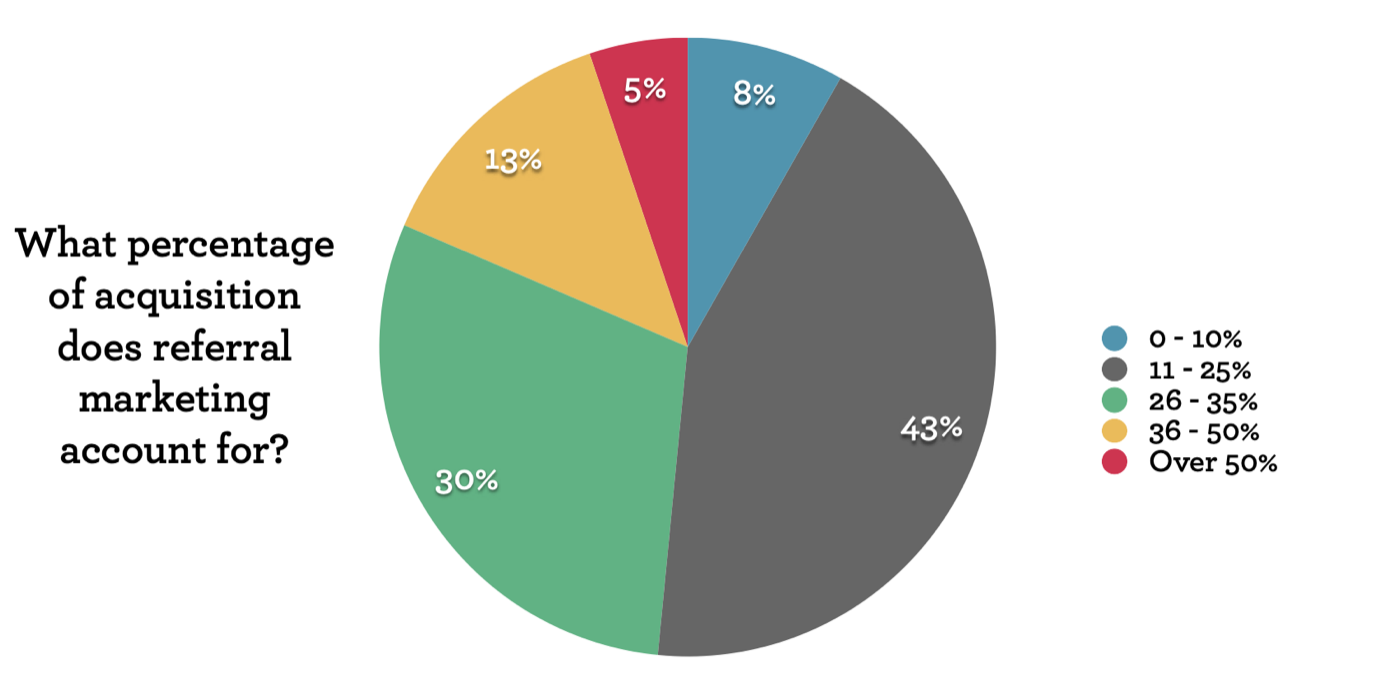
A closer look at referral marketing
It would make sense that a tactic that is effective throughout the funnel and generates significant numbers of new customers would draw increased spending. This is the case with social media and email, but not with referral marketing, the use of double-sided rewards to build trackable, measurable, scalable acquisition through customer referrals.
Marketers do plan to spend more on referral marketing next year, but it's in the bottom half of the list. Gigaom Research noticed similar trends in calling the tactic the "digital-marketing dark horse." Gigaom said that referral's comparative underexposure, combined with its high effectiveness, meant that brands that invest in referral can gain a competitive advantage over those investing elsewhere. Our results bear out a similar conclusion for retailers.
In delving deeper into retail marketers' experience with referral marketing, we found that:
- Most retail marketers are familiar with referral marketing.
- Most retail marketers agree that it generates valuable new customers.
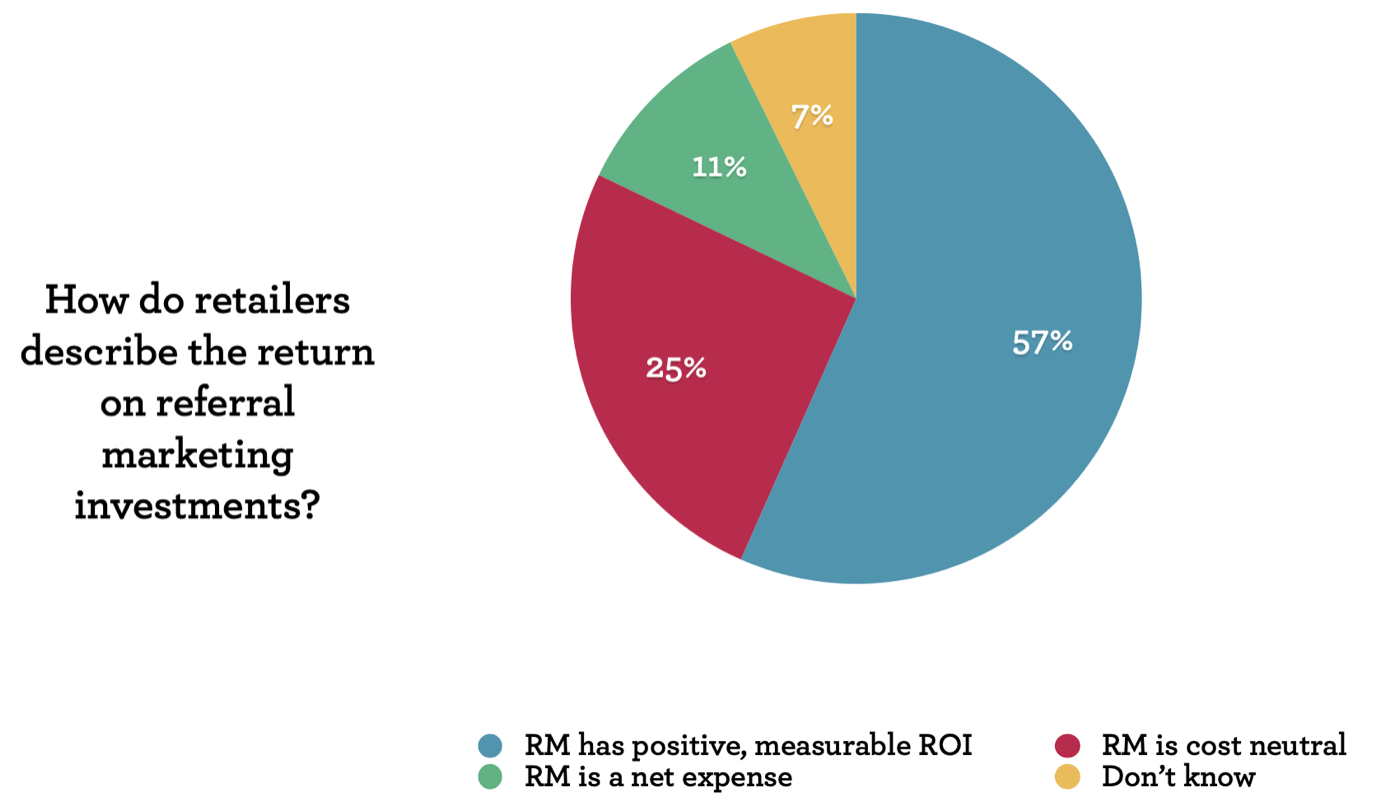
- The majority of retail marketers agree that referral marketing has a positive, measurable ROI.
Familiar, but less commonly used
Almost half of retail marketers say they use referral marketing regularly, while close to another third say they have tried it. These are high numbers, but even if 55 percent of marketers use referral marketing regularly (see the usage list above), it is still the second-least common digital tactic among retail marketers.
- I use referral marketing regularly: 48%
- I'm familiar with the concept, and have tried it but do not use it regularly: 32%
- I'm familiar with the concept, but I haven't tried it: 17%
- I am unfamiliar with the concept: 3%
How retailers describe referral marketing
When asked to describe referral marketing, respondents most commonly said:
- It generates valuable new customers (55%)
- It is a way to reward my existing customers (54%)
- It is a way for my existing customers to share rewards with their friends (50%)
- It helps me capitalize on my social follower base (46%)
One third of retailers believe referral marketing lets them keep control of their brand compared to affiliate marketing.
Return on investment
In retreat: paid search, content, and affiliate
Paid search, content marketing, and affiliate marketing show the correlation between effectiveness and investment at the other end of the scale. They are the least commonly used digital tactics and, retailers say, the least effective for reaching all goals. Paid search's effectiveness for acquisition is the lone exception: while not at the very bottom of the list, it still falls in its lower half.
Paid search
Paid search delivers at least 36 percent of customer acquisition for only 17 percent of its users. By share of acquisition: 0 to 10%, 28%; 11 to 25%, 31%; 26 to 35%, 24%; 36 to 50%, 11%; over 50%, 6%.
Content marketing
No retailers report acquiring more than 50 percent of their customers using content marketing. By share of acquisition: 0 to 10%, 11%; 11 to 25%, 40%; 26 to 35%, 28%; 36 to 50%, 21%; over 50%, 0%.
Affiliate marketing
Affiliate marketing acquires at least 36 percent of customers for the smallest number of marketers of any tactic surveyed. By share of acquisition: 0 to 10%, 13%; 11 to 25%, 51%; 26 to 35%, 25%; 36 to 50%, 8%; over 50%, 4%.
Key takeaways
Retail marketing today requires the right combination of programs. Marketers should experiment with different tactics, measure results, and determine the optimal mix for building awareness, acquiring new customers, and growing their business.
Key takeaways
- Realign your digital marketing mix to meet your business objectives: pick the right tactics for the right goals.
- Invest more in highly productive tactics such as social media and email marketing; cut spending where there are diminishing returns, such as paid search or affiliate marketing.
- If you are not already doing so, consider adding referral marketing to your digital mix, especially to meet customer acquisition goals.
Methodology
In August 2014 we surveyed 302 respondents in primarily U.S. retail companies varying widely by geography, revenue, and type. Over half of respondents held jobs in marketing or advertising. Others held job functions including information technology, general management, and executive.
| Retailer type | Share of respondents |
|---|---|
| Clothing, Shoes, Jewelry and Accessories | 22% |
| Miscellaneous Retail | 16% |
| Computers, Electronics and Home Entertainment | 15% |
| Building Materials, Hardware and Home | 13% |
| Supermarkets, Groceries and Specialty Foods | 10% |
| Home Furniture, Furnishings and Equipment | 5% |
| Cosmetics, Beauty Supplies, and Fragrances | 4% |
| Office Supplies and Stationery | 4% |
| Books, Music and Movies | 3% |
| Automotive Parts and/or Accessories | 3% |
| Cars, Trucks and Motorcycles | 2% |
| Beer, Wine and Alcohol | 2% |
| Pets and Pet Supplies | 1% |
| Garden Supplies, Flowers, Plants and Nurseries | 1% |
| Toys, Games and Hobbies | 0% |
About Extole
Extole helps brands acquire new customers at scale by rewarding existing customers. Our referral platform helps brands take advantage of a unique resource they already have in front of them: their current customers. At the time of this survey, more than 300 retail, financial services, consumer subscription, and B2B companies used Extole to acquire new customers.
See what referral can do for your retail brand
Learn more about referral programs for retail, then request a demo to see how Extole helps retailers turn their best customers into a measurable source of new ones.